Tamil Nadu 2026 / TVK rise
The psychological geography of TVK's rise.
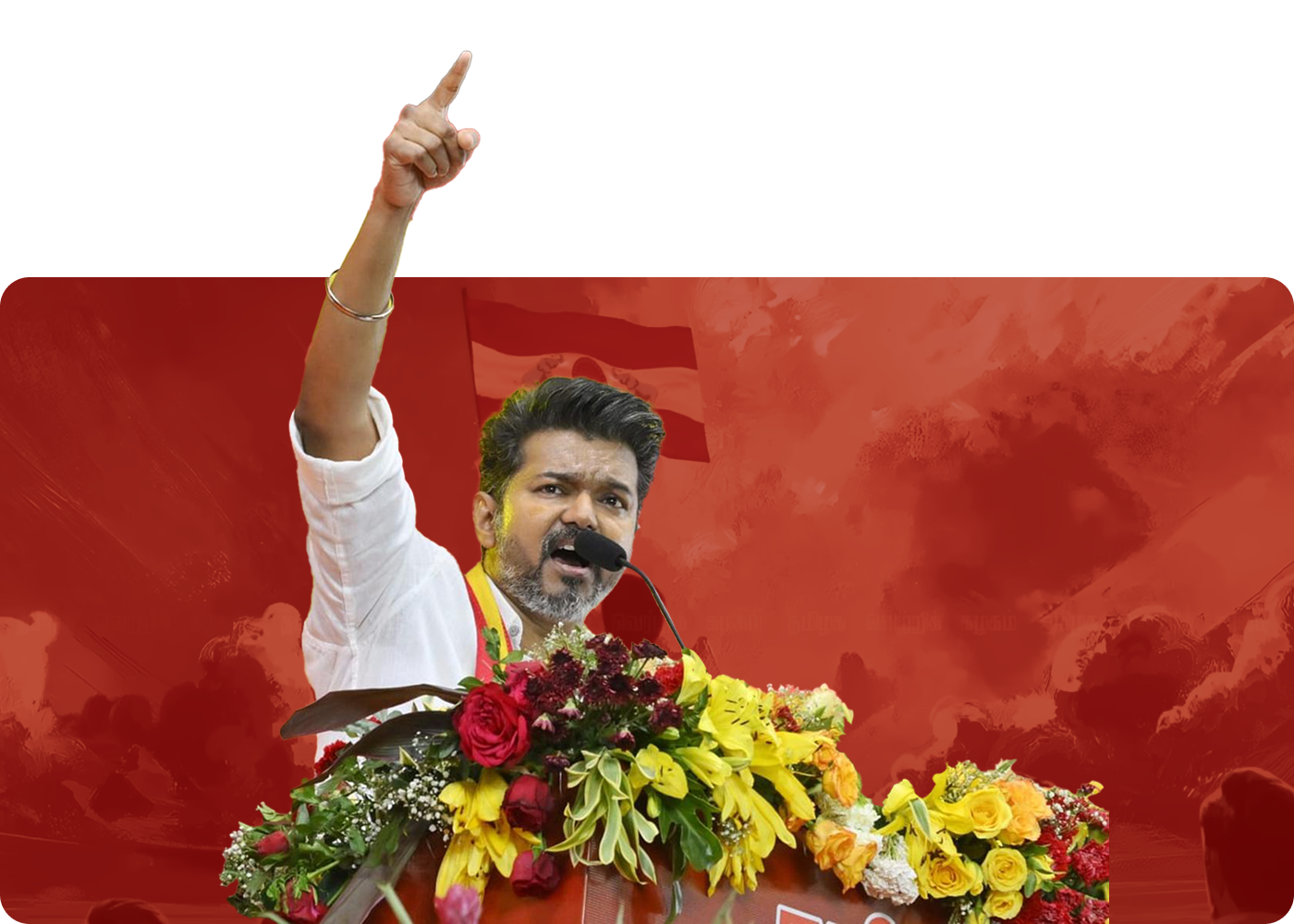
TVK won 108 seats without the booth-level infrastructure established parties spent decades building. The party compensated through digital saturation, fan networks, and algorithmic targeting. The wins cluster around urban belts where media reach could substitute for conventional ground organization. This represents a structural shift in how electoral victories can be achieved.
Seats won in a 234-seat Assembly.
Required to independently form government.
Backed strength after the confidence vote.
Wins cluster around corporations, municipalities, town panchayats, and commuter belts.
Psychological geography
The map points to city belts and rural-urban edges.
The 108 wins are not spread evenly. They are strongest around Greater Chennai, western industrial towns, central urban nodes, and southern city belts. These are high-migration, high-mobile-penetration constituencies where private employment is dominant and anti-incumbency runs deep.
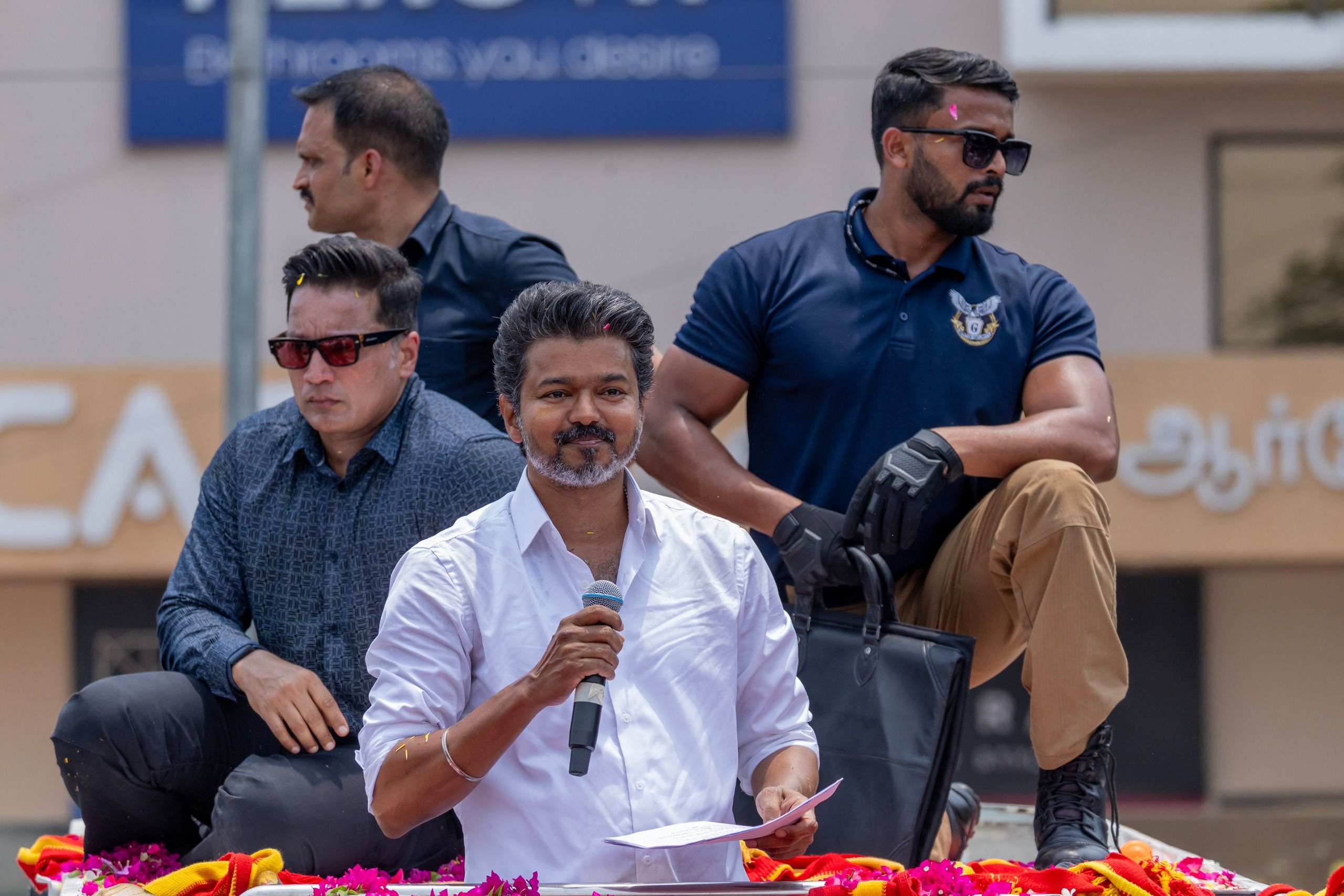
The psychological geography is not just where phones are common. It is where Vijay's parasocial trust could travel faster than party trust. Urban voters and first-time voters did not have to know a local TVK functionary to feel they knew Vijay; the emotional contract had been built through cinema, fan clubs, welfare gestures, and short-video repetition.
That is why aspiration mattered more than identity in some city belts. Migrants, private-sector workers, students, and young families were not only voting as caste blocs or village networks. They were responding to a promise of mobility, dignity, and personal recognition. Rural voters still saw politics through local intermediaries, caste arithmetic, and booth-level dependence; urban migrants were more willing to replace inherited party loyalty with a celebrity-mediated bet on change.
Loading ECI constituency blocks...
Greater Chennai belt
Gummidipoondi through Sholinganallur, Alandur, Pallavaram, Tambaram, Chengalpattu, and Thiruporur show a heavy Chennai-periphery run.
Western urban belt
Salem, Erode, Tiruppur, Coimbatore, Palladam, Sulur, and Kavundampalayam point to industrial-city and commuter-town strength.
Central city belt
Srirangam, Tiruchirappalli East, Thiruverumbur, Perambalur, Thanjavur, and Kumbakonam show a Cauvery-delta urban edge.
Southern city belt
Madurai, Karaikudi, Sivaganga, Thoothukudi, Tirunelveli, Nanguneri, and Radhapuram keep the pattern from being Chennai-only.
Reels machine
The urban-rural divide was also an algorithmic divide.
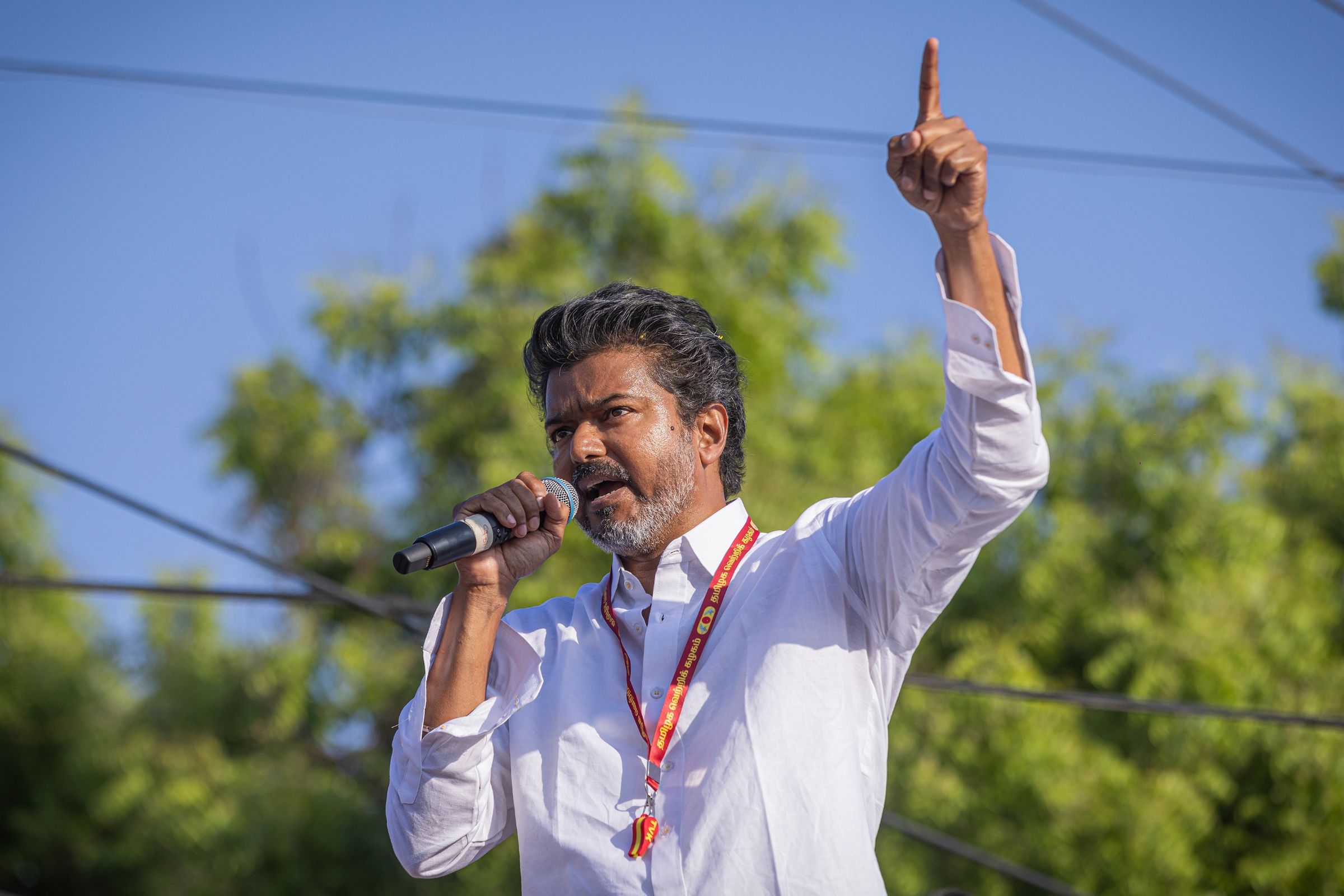
The Times of India reported that Vijay turned 85,000 fan clubs into virtual warriors and micro influencers, while the final leg spawned a million reels. That is not just a content volume target. It is a feedback system. Sentiment data identifies which emotional angle is working in which geography. The next batch of reels adjusts accordingly. The loop ran continuously through the campaign period.
The Times of India reported that the final leg of the campaign spawned a million reels, turning fan distribution into a mass content engine.
Sentiment analysis can identify anger, aspiration, caste/community language, local issues, and creator formats that are already moving.
Short-video platforms reward fast iteration: publish, read engagement, adjust the next batch, and keep feeding the same emotional lane.
TVK gained faster in places where voters live on phones, commute for work, and see campaign clips every day.
TVK wins from Gummidipoondi to Thiruporur and the city core
TVK wins around Salem, Erode, Tiruppur, and Coimbatore
TVK wins around Tiruchy, Perambalur, Thanjavur, and Kumbakonam
TVK wins around Madurai, Sivaganga, Thoothukudi, and Tirunelveli
Verification
The 108-seat haul came without the organizational depth rivals relied on.
TVK's strength overlaps with corporations, municipalities, town panchayats, and commuter suburbs—exactly where digital saturation can compensate for weak booth infrastructure. Established parties had local workers at every polling station; TVK substituted algorithmic reach and celebrity trust. The pattern proves that media-first campaigns can win at scale in urbanizing India.
Stress test
The urban thesis also has limits.
TVK did not simply win every urban seat. The losses show where digital reach was strong enough to compete, but not always strong enough to dislodge local machines, caste/community consolidation, or candidate-level incumbency.
Coimbatore South
The urban signal was real, but V. Senthilbalaji still held the seat by 2,271 votes. That points less to digital failure than to candidate weight, local organization, and a split anti-DMK field where AIADMK retained 20.25%.
Hosur
This is the strongest stress-test of the thesis. Hosur is urban, industrial, and migrant-heavy, but P. Balakrishnareddy kept a large local base while TVK finished behind ADMK and ahead of DMK. The city-belt thesis weakens where an established local machine already owns the anti-incumbency lane.
Chepauk-Thiruvallikeni
TVK came close in a dense Chennai seat, but Udhayanidhi Stalin still won by 7,140 votes. Here celebrity trust met a party stronghold, welfare memory, minority consolidation, and incumbent recognition.
ECI totals support the stress-test. Constituency-level booth patterns, local organization, caste arithmetic, and candidate strength explain why some urban seats still resisted the TVK swing.
Seat math
TVK became the centre of gravity.
108 seats is 10 short of a standalone majority. It still made TVK the largest party in the assembly. The floor test settled the post-poll question, with 144 MLAs voting in favour and confirming the government's working majority.
Timeline
The party is two years old. The network behind it is not.
 10 May 2026
 Oath of office
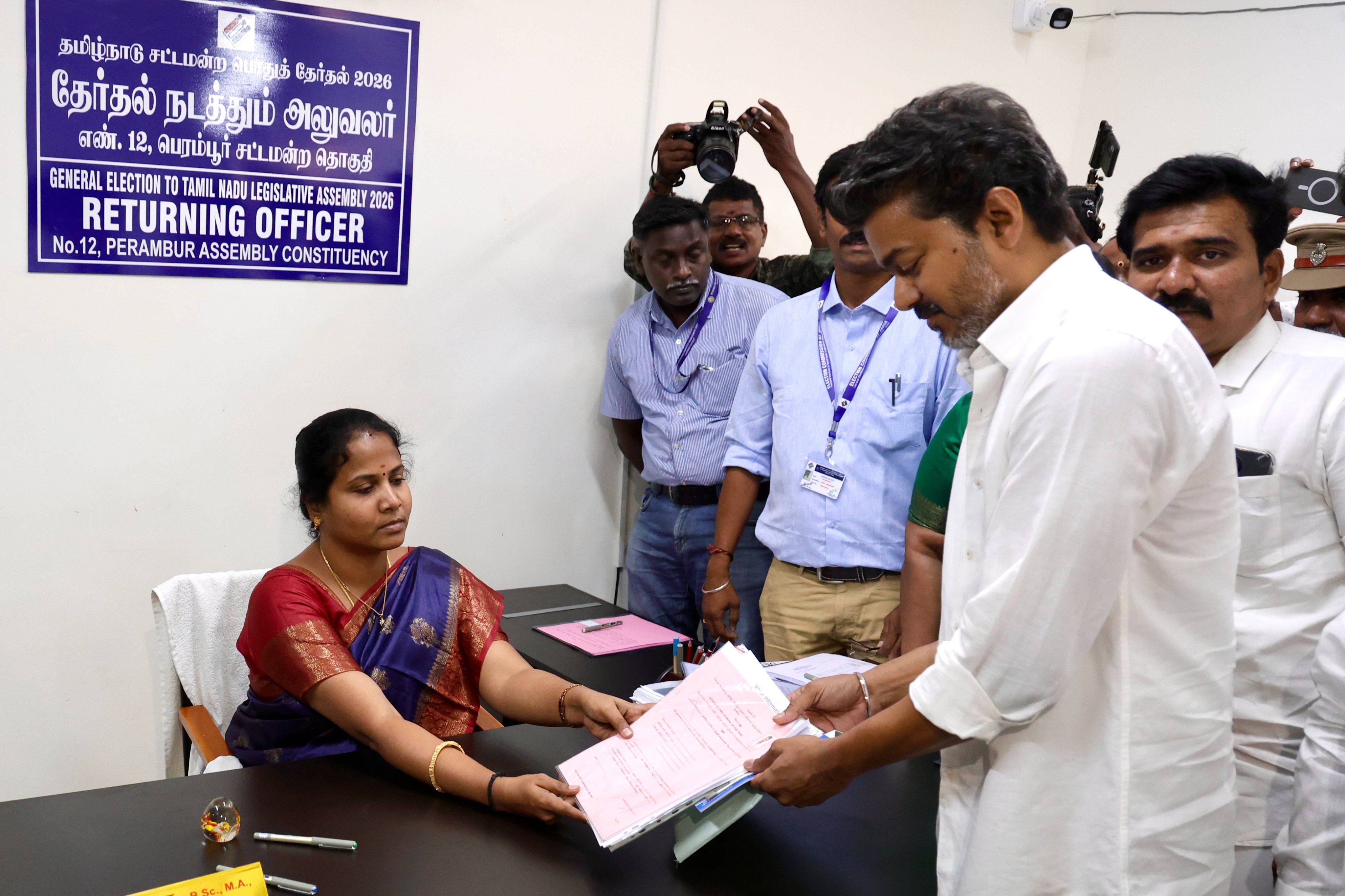
The floor test converted TVK’s plurality into a confirmed working majority in the Assembly.
What the record supports
The campaign worked at four levels.
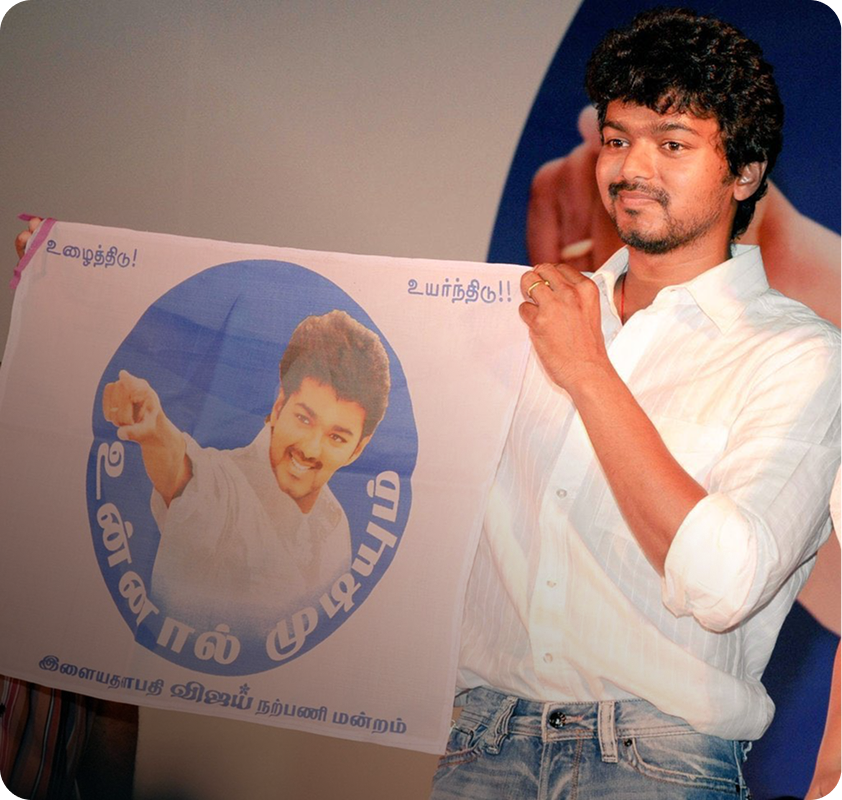
Ground layer / Organizational gap
TVK won without the booth machinery rivals had built over decades.
Established parties spent years building booth agents, local cadre, and precinct-level vote management. TVK had fan clubs and welfare networks, but not the conventional polling-day infrastructure. The 108-seat haul shows that digital reach and celebrity capital can substitute for organizational depth in urbanizing constituencies.
- No decades-old booth network
- Fan base ≠ polling agents
- Digital and media overcame structural gap
Influence flow
TVK won 108 seats without decades of booth-level organization.
Established parties had ward-level agents, polling booth workers, and local cadre built over generations. TVK had fan clubs and welfare goodwill, but not traditional electoral machinery. Digital distribution, high-frequency content, and celebrity trust bridged the infrastructure gap in urbanizing constituencies.
Readout
The victory rewrites the rules of Tamil Nadu electoral politics.
TVK won 108 seats without the booth-level organization that DMK and AIADMK built over decades. The party had fan recognition and welfare goodwill, but not conventional polling infrastructure.
The result proves that algorithmic reach, high-frequency digital content, and celebrity capital can substitute for traditional ground strength in urbanizing constituencies. This changes what future campaigns will prioritize.
Sources and image credits
Election totals and constituency stress-tests use ECI result pages updated 5 May 2026. Campaign-method claims use named public reports and official TVK pages.